

Art & Design
Learn all about designing costumes, props, and sets for an opera and the many people who make these productions possible.
Our supporters play a crucial role in helping us bring opera to everyone across Scotland. Show your love for opera by becoming a Supporter of Scottish Opera, or make a one-off contribution below:
For Secondary School Pupils
Free teaching resources
Focusing on the expressive arts curriculum including Art & Design, Drama and Music, these lessons are based around the 19th century Italian composer Gaetano Donizetti’s comic opera The Elixir of Love (L’elisir d’amore). Each unit allows flexibility – educators can utilise the full packs or select key aspects, and there is no set period for completion.
The project is designed to tie in directly to the experiences and outcomes of A Curriculum for Excellence, giving pupils a greater understanding of the arts and creative industries, and helping young people identify their talents and aspirations for the future.
Commissioned by us from members of the Expressive Arts Faculty at Largs Academy, North Ayrshire, the intention is to engage pupils’ critical thinking skills, which are transferrable across disciplines, through opera.
Learn all about designing costumes, props, and sets for an opera and the many people who make these productions possible.
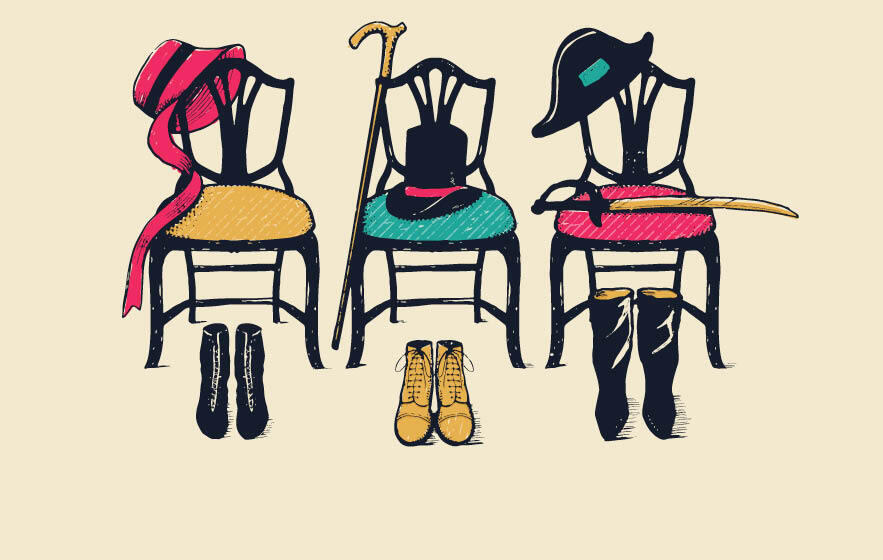
Explore how characters, props, and sets work together convey a director’s ideas across three versions of The Elixir of Love.
Learn how to analyse a musical score, compose a song, and perform along to key moments from The Elixir of Love.
Every learning experience (practical or theoretical) can be enhanced by analytical thought processes. These help us navigate school, career, and daily life. They can resolve issues and challenges, identify logical gaps in reasoning, and enable greater understanding of another’s viewpoints.
Above all, critical thinking encourages a young person to question, to discuss with others, and to make informed and perceptive decisions. At a stage in their secondary education when young people are making decisions about the subjects that they will study at exam level – choices that will have a significant influence on the next phases of their lives – this project helps them explore and develop decision making and critical thinking.
While it may seem conflicting to align the ‘freeform’ artistic process of producing opera or theatre with the ‘rational’ discipline of critical analysis, a key driver of a show’s creative concept is choices that must connect the show’s many parts. These result in a through line that gives the piece authenticity from the audience’s perspective.
Opera is about making and telling stories. Our aim is to present the story to audiences in the most engaging, exciting, entertaining, relevant, inspirational, and thought-provoking way. We would like to share some the ways in which we bring together the pieces that make up this complex and fascinating art form that encompasses music, drama, visual art, and movement.
We have created a series of short films around The Elixir of Love, showing the same scenes many ways from different perspectives and creative concepts. This is a story about a poor, shy boy and a rich, confident girl. He loves her; she barely notices he is alive – or at least pretends she does. Add a dodgy travelling salesman and a swaggering sergeant, and we have recipe for love and laughter in equal amounts.
The resources are divided into two sections: Learning and Research, and Classroom Tasks.
Opera Scenes
We have chosen six key scenes from The Elixir of Love that form a narrative from start to finish. We then filmed three different dramatic concepts of these same scenes, making 18 performance scenes to analyse (only 15 are used in the music unit). Pupils can contrast and compare the different approaches and discuss how effective they are in telling the story, explaining their reasoning.
Creative team interviews
We meet the director, set and costume designers, musical director (conductor), and singers. These interviews will assist pupils in getting to grips with opera making and the choices that go into each production and interpretation.
The authors have created activities and tasks in three subject areas. Each topic has five stages that you can tailor to your own pupils.
Art & Design
Drama
Music
Head of Music
Derek Clark
Director
Roxana Haines
Designer
Finlay McLay
Film Maker & Editor
Bevis Evans-Teush
Sound Recordist
Matt Harvey
Assistant Director
Flora Emily Thomson
Costume Supervisor
Stella Tani
Technician
Rebecca Coull
Company Stage Manager
Rose Ann Gross
Repetiteur
Beth Jerem
Adina
Catriona Hewitson
Nemorino
Shengzhi Ren
Belcore
Arthur Bruce
Dulcamara
Frank Church
Teaching Resources created by:
Donna Lloyd, Kayla McGregor, Ailie Austin, Dawn McCarron and Jared Hutsby
With kind thanks to:
North Ayrshire Council, Craig Smith, Stephen Roe, and to John Macfarlane for his kind permission to use designs from The Rake’s Progress (2012) as part of these resources.
Questions about our digital resources?
Please contact our Producer Madeleine Coxshott using the contact form below: